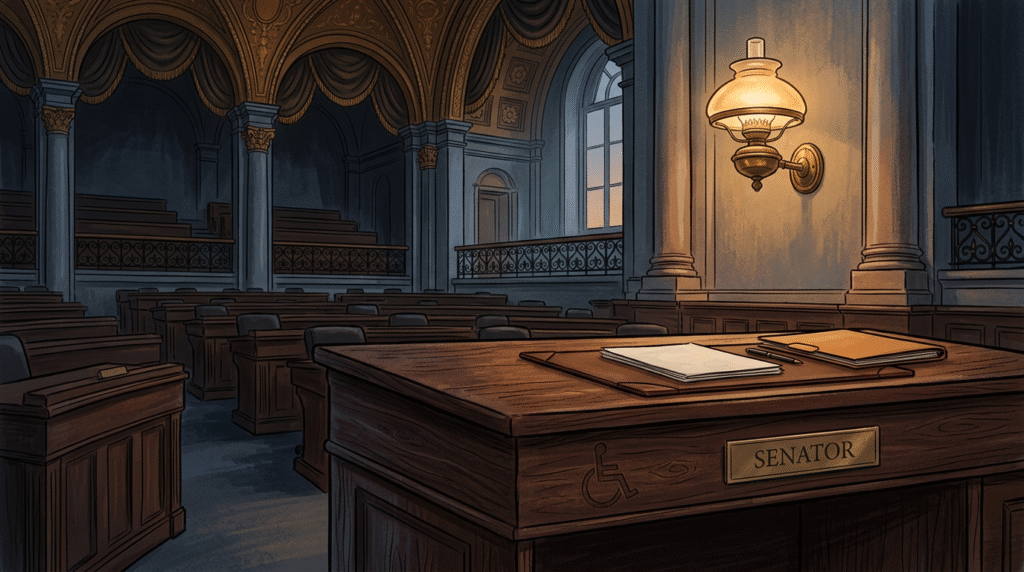
This isn’t a story about one party’s corruption. It’s a story about a structural gap in American government that both parties have quietly exploited for years, and it just resurfaced with Mitch McConnell.
THE CURRENT CASE
McConnell, Kentucky’s longest-serving senator, has now been hospitalized for more than three weeks with no announced return date. His office released a statement insisting he “isn’t taking a break from Senate business,” that he’s working with legislative staff and his Kentucky team, and that he intends to return “as soon as his doctors permit.” To be fair to him directly: the public record doesn’t establish that McConnell has any cognitive impairment. What it does establish is simpler and just as consequential — Kentucky’s Senate seat is occupied, but the person elected to cast its votes currently cannot.
THE PATTERN THIS ECHOES
This is exactly the “Kay Granger question,” and it deserves to be told in full because the details are worse than most people remember. Granger, a Fort Worth Republican who’d served since 1997, cast her last House vote on July 24, 2024, then simply vanished from public view. For months, nobody — not her own party, not the press covering Congress nationally — said anything. It took a Texas outlet with an editorial staff of ten, the Dallas Express, to actually go find her. Reporters discovered her Fort Worth congressional office had been packed up and closed before Thanksgiving, the windows covered, no staff inside. They eventually found she’d been living in a senior living facility, later confirmed by her family to involve dementia. She hadn’t voted in nearly five months. She didn’t resign, so no vacancy was ever created, no substitute could cast her vote, and her elected successor couldn’t take office early — Texas’s 12th District simply went unrepresented for the better part of half a year, and virtually nobody in Washington said a word about it while it was happening.
THE PART THAT MAKES THIS BIPARTISAN, NOT PARTISAN
The uncomfortable truth here: this isn’t a Republican problem. Democratic Sen. Dianne Feinstein missed more than two months of Senate work in 2023 recovering from shingles, returned in a wheelchair, voted only sporadically, and died in office that September at 90 — her death, not her illness, is what finally created the vacancy California’s governor could fill. Rep. Tom Kean Jr. (R-NJ) disappeared for nearly four months in 2026, missing more than 100 House votes, before eventually revealing he’d been hospitalized for depression — a case that also deserves real compassion rather than mockery, and one more data point showing this cuts across both parties and isn’t limited to physical decline.
Norm Ornstein’s distinction matters here: there’s a real difference between one senator’s temporary illness and something approaching mass incapacity across an aging Congress. But the mechanism is the same regardless of scale: members of Congress are under no legal obligation to disclose health conditions that impair their ability to serve, or to explain absences to the people who elected them. That’s not a loophole either party invented — it’s a gap in how the institution was built, one that’s become far more consequential as the average age of Congress has climbed and medical advances let people serve, technically, well past the point they can meaningfully do the job.
WHY THIS BELONGS IN THIS NEWSLETTER ANYWAY
Project Zero exists to hold Republicans specifically accountable this cycle, and that mission doesn’t change. But an institutional problem this real — a seat that’s occupied without being represented, sometimes for months, with the public having no legal right to know why — is exactly the kind of structural rot that deserves attention regardless of which party benefits from it in a given case. A voter in Fort Worth went unrepresented under a Republican. A voter in California went unrepresented under a Democrat. Neither of those voters got what they voted for, and neither party has shown much appetite for fixing the actual gap that let it happen.